Tensions in the Middle East once again highlight how sensitive natural gas prices are to geopolitical events. In contrast, electricity is proving to be a much more stable commodity thanks to the diversification of energy sources.
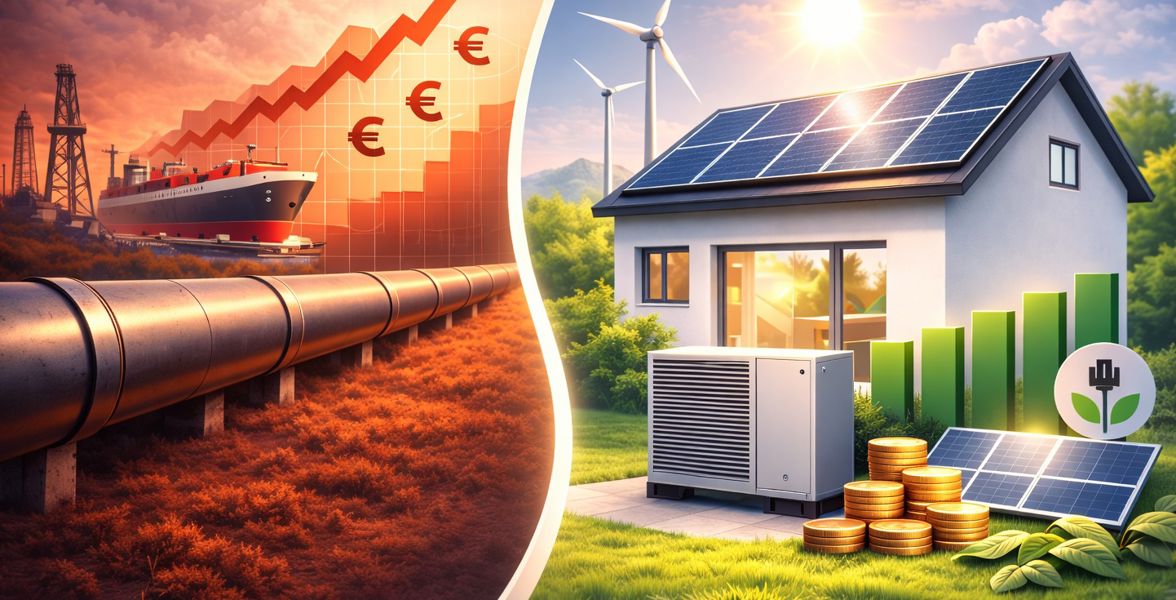
The economic impacts of the conflict between the United States, Israel and Iran have been reflected mainly in oil and natural gas prices, particularly due to disruptions to transport through the Strait of Hormuz. The situation escalated further following an Israeli attack on Iran’s South Pars gas field and a subsequent retaliatory Iranian strike on Qatar’s Ras Laffan complex, the world’s largest LNG export hub. Following these events, European gas prices climbed above €70/MWh.
Gas price increases are likely to persist
Severe damage to Qatari infrastructure has, according to available information, taken around 17% of LNG export capacity offline, with repairs expected to take months or even years. Qatar is particularly important for Europe. Although it covers only a smaller share of European demand, any disruption significantly affects the global LNG market and is reflected in higher prices across the EU.
When relying on gas for heating, households and businesses become increasingly exposed to geopolitical uncertainty and external factors beyond their control. Any prolonged crisis will sooner or later be reflected in end-user prices. Timing fixed contracts correctly is becoming increasingly difficult, if not impossible.
For a typical family house with an annual consumption of 20–25 MWh, this can mean additional costs of around €1,000 per year.
Electricity is more resilient to price shocks
At the same time, the current crisis shows that the European electricity market has learned from past events and now reacts much more calmly than the gas market. Bloomberg points out that wholesale electricity prices in countries such as Germany and France remain relatively stable compared to gas and are nowhere near the extremes seen in 2022. This is mainly due to a more diversified energy mix, higher generation from renewable sources, and in some countries also a stronger role of nuclear power.
Reuters adds that countries with lower dependence on gas and a higher share of nuclear, hydro, wind or solar energy are coping significantly better with the current price shock than those heavily reliant on gas. This is why electricity prices in some European countries are now more stable than gas prices, and this trend is likely to continue as domestic and renewable energy sources expand.
Why heat pumps make sense
From this perspective, investing in a heat pump—ideally combined with solar panels—represents a smart path towards more stable operating costs, greater resilience and higher energy independence during periods of uncertainty.
Heat pumps are approximately 3 to 5 times more energy efficient than gas boilers when considering SCOP values. In other words, they can generate several units of heat from a single unit of electricity, as they draw most of their energy from the surrounding environment.
This also means that, compared to electric boilers or direct electric heating, they are much less sensitive to electricity price fluctuations. To achieve the same level of thermal comfort, they require only a fraction of the input energy.